

 By
By 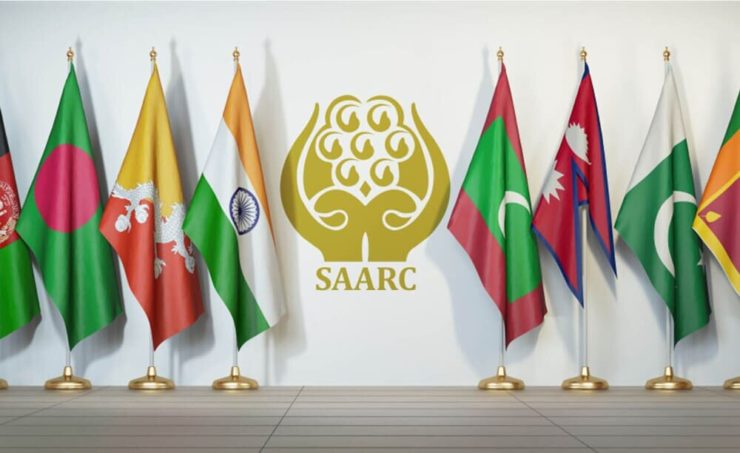
Trading blocs are generally referred to as a group of countries that regulate and promote trade activities across its member nations. These counties are generally in a specific geographical region. Such trading blocs come into being when an agreement is signed between two or more countries. The member nations have a certain set of rules for when dealing amongst each other. Apart from that, there are rules for when dealing with non-member nations as well.
Different types of regional trade blocs exist according to the kind of agreement signed by the member nations. They are –
- Preferential Trade Area (PTA) – This exists when member nations in a specific region agree to decrease or do away with tariffs on specific goods and services from other member nations of the area.
- Free Trade Area (FTA) – It is similar to a preferential trade area but the decrease or termination of tariffs apply to all goods and services instead of a specific set of goods and services coming from the member nations.
- Customs Union – Customs Unions have a common external tariff for non-member nations and also do not have any tariff barricades between member nations.
- Common Market – In a common market trade agreement, member nations do away with all internal trade barriers and have a common policy framework for dealing with trades of non-member nations.
South Asian Association for Regional Cooperation (SAARC)
The South Asian Association for Regional Cooperation (SAARC) was brough into existence on the 8th of December 1985, with the signing of the SAARC Charter in Dhaka. Such an idea of regional cooperation was first conceptualised in 1980, in the month of May, by the Late President of Bangladesh, Ziaur Rahman. The foreign ministers of India, Pakistan, Bangladesh, Bhutan, Nepal, Sri Lanka and Maldives then met for the first time in April 1981 and identified the initial 5 key areas of regional cooperation.
South Asian counties have a huge potential as it is equipped large deposits of natural resources and geographic diversity. Hence it is up to these countries themselves to work together towards stability and peace in the region. The SAARC was founded for the political, regional and economic relations of the South Asian States. The organisation works towards maintaining peace in the region and economic and social empowerment of the people. The logic behind the SAARC is the building of a community in the region based on common interests and inter-governmental cooperation. Almost all member states share borders with India and can be linked to the almost 200 years of vicious atrocities of the British empire.
As defined in the founding charter, the SAARC must meet the following objectives through their policies and programmes[1] –
- Promote the welfare of the peoples of South Asia and improve their quality of life.
- Accelerate economic growth, social progress and cultural development in the region by providing all individuals the opportunity to live in dignity and realise their full potential.
- Promote and strengthen collective self-reliance among the countries of South Asia.
- Contribute to mutual trust, understanding and appreciation of one another’s problems.
- Promote active collaboration and mutual assistance in the economic, social, cultural, technical and scientific fields.
- Strengthen co-operation with other developing countries Strengthen co-operation among themselves in international forms on matters of common interest.
- Cooperate with international and regional organisation with similar aims and purposes.
Currently the SAARC comprises of 8 member states – Afghanistan, Bangladesh, Bhutan, India, Maldives, Nepal, Pakistan and Sri Lanka. Afghanistan became the 8th member nation in 2005, at the SAARC’s 13th annual summit.
Australia, China, European Union, Iran, Japan, Mauritius, Myanmar, Republic of Korea and United States of America joined the SAARC on the grounds of acting as observers.
The SAARC was formed with keeping a set of principles in mind. Cooperation among member states would be based on these core principles of the organisation[2] –
- Having mutual respect for each other’s sovereignty, equality, political independence and non-interference in the internal affairs of other member states.
- It should be consistent with mutual and bilateral obligations.
- This cooperation should not substitute bilateral cooperation but should complement them.
“The 21st century belongs to Asia” (Alam,2006). Pakistan can dominate other regional states as it has a strategic bridging location. India has a dominating presence at a global level and has a stable economy and nuclear power. Both Nepal and Bhutan have rich deposits of energy resources. Bangladesh’s political-strategic location is also very important to China as well. However, the rising tensions between India and Pakistan has been a huge stumbling block in the process of regional cooperation. This would render the development of the SAARC as a “stop and go” module (Dash, 2008).
Currently, the member nations of the SAARC account for 3% of the world’s area, 21% of the world’s population and 4% of the global economy. All the member nations have been plagued by the same problems such as illiteracy, malnutrition, struggling economic circumstance, internal conflicts, etc. These countries can work towards finding common solutions to raise their overall standard of living and locating similar fields of development. It also happens to be the most densely populated region on the planet and also one of the most fertile regions. A huge portion of the SAARC population are reliant on agriculture as well.
Compared to other regional trade blocs, the SAARC is a fairly new organisation. To increase the internal trade and lessen trade gap in terms of volume; a free trade area has been set up among the member states. The SAFT agreement was signed to decrease the customs duties on goods only. This agreement aims to reduce customs duties on goods to zero by the year 2016. The SAFTA has the potential to provide long-term benefits but there may be short-term costs to pay for (Kemal, 2004).
The South Asian University was founded in 2010 by the SAARC desk. It is an international university that offers doctoral and postgraduate programs in various disciplines. Education may turn out to be the key to expedite the integration of the region. The South Asian University aims to produce leaders with visions of success for their countries and the region as a whole (Dogra, 2010).
In 2010, the SAARC development fund was established for the upliftment of existing economic and social conditions. The SAARC has also made it possible to present Confidence building measures to reduce conflict in the region. Due to the presence of the prevalent social and economic structures, the outreach has been slow, but it has certainly helped in extending the reach of the organisation.
The onset of the Covid-19 pandemic has made cooperation the need of the hour among the member states. In January of 2021, the Indian Ministry of External Affairs stated that they would be supplying indigenously produced vaccines to the members of the SAARC in a phased approach.
Nationalist outlook trumps international outlook in the South Asian region. This has been a huge barrier in the effective functioning of the SAARC. An excessive element of nationalism has to be attributed to the slow progress of the SAARC. Despite agreeing to keep political issues aside, the member nations have not been able to make headway due to the fundamental differences between the governments. Most member nations have had issues in their bilateral relations while dealing with India. There is the Kashmir issues between India and Pakistan and the refugee situation and the distribution of water in Ganges issue between India and Bangladesh. Such issues have prevented the cooperation between the member states.
There are also fears that, due to its dominance in terms of the population, military and economy; India would use the SAARC to increase its dominance in the region. As a result, some member states with the help of foreign states have tried to reduce India’s influence in the region. Moreover, the 2 largest nations in the SAARC, India and Pakistan, have an ever-growing enmity between them. Pakistan’s role in aiding terrorist activities in India has been a great barrier to India’s development as well. India however, maintained a level-headed approach in the SAARC arena and has pleaded to rid the SAARC region of terrorism.
Since most of the member states are exporting similar products to foreign markets, there lies an eerie tension in the face of cooperation among the member nations. There are also fears the India may use the SAFTA agreement to dominate the markets of the smaller nations. Due to such reason, the SAARC countries have failed to show a united front in terms of economic matters.
It is necessary for the member states to resolve the existing differences if the SAARC is to function smoothly and successfully. Member states must unite to prevent foreign intrusion in regional matters. SAARC could provide an alternative to the threat of repeated Chinese investment and loans. The SAARC should be viewed as belonging to the people of the region rather than to the government.
BIBLIOGRAPHY
- SAARC: A Journey with the Coexistence of Success & Failure, along with COVID-19. Dr. Gouri Sankar Nag, Dr. Manas Mukul Bandyopadhyay.
- SAARC: An Evaluation of its Achievements, Failures, and Compulsion for Cooperation. Zahid Yaseen, Muhammad Muzaffar, Iqra Jathol.
- South Asian Association for Regional Cooperation (SAARC): Its Role, Hurdles and Prospects. Irum Shaheen. Department of Political Science, University of Peshawar, Pakistan.
http://www.iosrjournals.org/iosr-jhss/papers/Vol15-issue6/A01560109.pdf?id=7747
- Reclaiming SAARC from the ashes of 2020. Suhasini Haider.
https://www.thehindu.com/opinion/lead/reclaiming-saarc-from-the-ashes-of-2020/article33561545.ece
- India’s place in a post-COVID-19 world: Restructuring economic policy, bridging trust deficit will have to go hand-in-hand. Anant Singh Mann and Suchet Vir Singh.
- ‘Saarc Consensus’. Dr Niaz Murtaza.
https://www.dawn.com/news/1603708
[1] Article I, CHARTER OF THE SOUTH ASIAN ASSOCIATION FOR REGIONAL COOPERATION.
[2] Article II, CHARTER OF THE SOUTH ASIAN ASSOCIATION FOR REGIONAL COOPERATION.
